Variegation: Why Your White Leaves Are Both a Blessing and a Curse
- Jonny Balchandani
- Sep 18, 2025
- 3 min read


Ah, variegation. The botanical equivalent of a glittering lottery ticket. It’s the thing that makes plant collectors go weak at the knees, send bank accounts into free fall, and sparks late-night bidding wars over a single cutting. But what actually is it? Why does your Monstera albo look like it’s been dipped in cream, and why does it grow slower than a teenager doing chores? Let’s dig in.
What Variegation Actually Is
First things first: variegation isn’t magic, and it’s not fairy dust sprinkled by the plant gods. It’s a mutation. A quirk in the plant’s DNA where chlorophyll (the green pigment that makes photosynthesis possible) is missing in certain cells.
That creamy white patch you drool over? Gorgeous, yes. But essentially, it’s your plant holding up a sign that says:

The Curse of White Leaves
Here’s the kicker: the more white your plant has, the less energy it can produce. White = no chlorophyll = no food production. That’s why variegated plants tend to be slower, fussier, and sometimes heartbreakingly unstable.
So while you’re over there celebrating your first half-moon Monstera leaf like it’s a newborn child, remember — it’s also a little chlorophyll-deficient liability.

The Different Types of Variegation (aka the Jungle Catwalk)
Not all variegation is created equal. Here are the main categories you’ll see strutting their stuff:
Marbled variegation
A chaotic splash of colours across the leaf. Each new growth is a roll of the dice: masterpiece or mess.
Reflective variegation
Silvery patterns that shine when light hits just right. Scindapsus ‘Silver Lady’ rocking her spa-day glow.
Blister variegation
Tiny air pockets under the surface of the leaf that make it sparkle with a pearly shimmer. Subtle, but lush.
Chimeral variegation
The unstable wild child. Two different cell lines coexisting in one plant. Translation: one day it’s variegated, the next it’s plain green. Collectors both love and fear this one.
Pattern-gene variegation
Written into a plant’s DNA, making it stable and predictable. Every new leaf — and even propagated cuttings — will carry the same consistent patterns.
Why They’re So Damn Expensive
Variegated plants are the luxury handbags of the plant world. Why?
Rarity – Stable variegation is tricky to reproduce.
Slow Growth – Remember, white bits = no food = sluggish.
Propagation Struggles – One cutting may keep its pattern… another may lose it entirely.
Demand vs Supply – Hype is real. The fewer there are, the higher the price climbs.
It’s a perfect storm for inflated prices. And let’s be honest: we love the drama.

How to Care for Variegated Plants (Without Screaming)
Give them more light than their all-green cousins (but not direct sun unless you want crispy leaves).
Keep conditions stable — temperature swings = stress = green reversion.
Feed them well because they’re working harder with less chlorophyll.
Prune smart — if a stem goes fully green, cut it back before your plant decides to ditch the variegation forever.

The Emotional Rollercoaster
Variegated plant ownership is basically dating: highs, lows, and a lot of uncertainty.
The thrill of your first half-moon leaf = pure euphoria.
Watching your prized albo pump out three green leaves in a row = heartbreak.
Seeing a new splashy variegated leaf = back to euphoria.
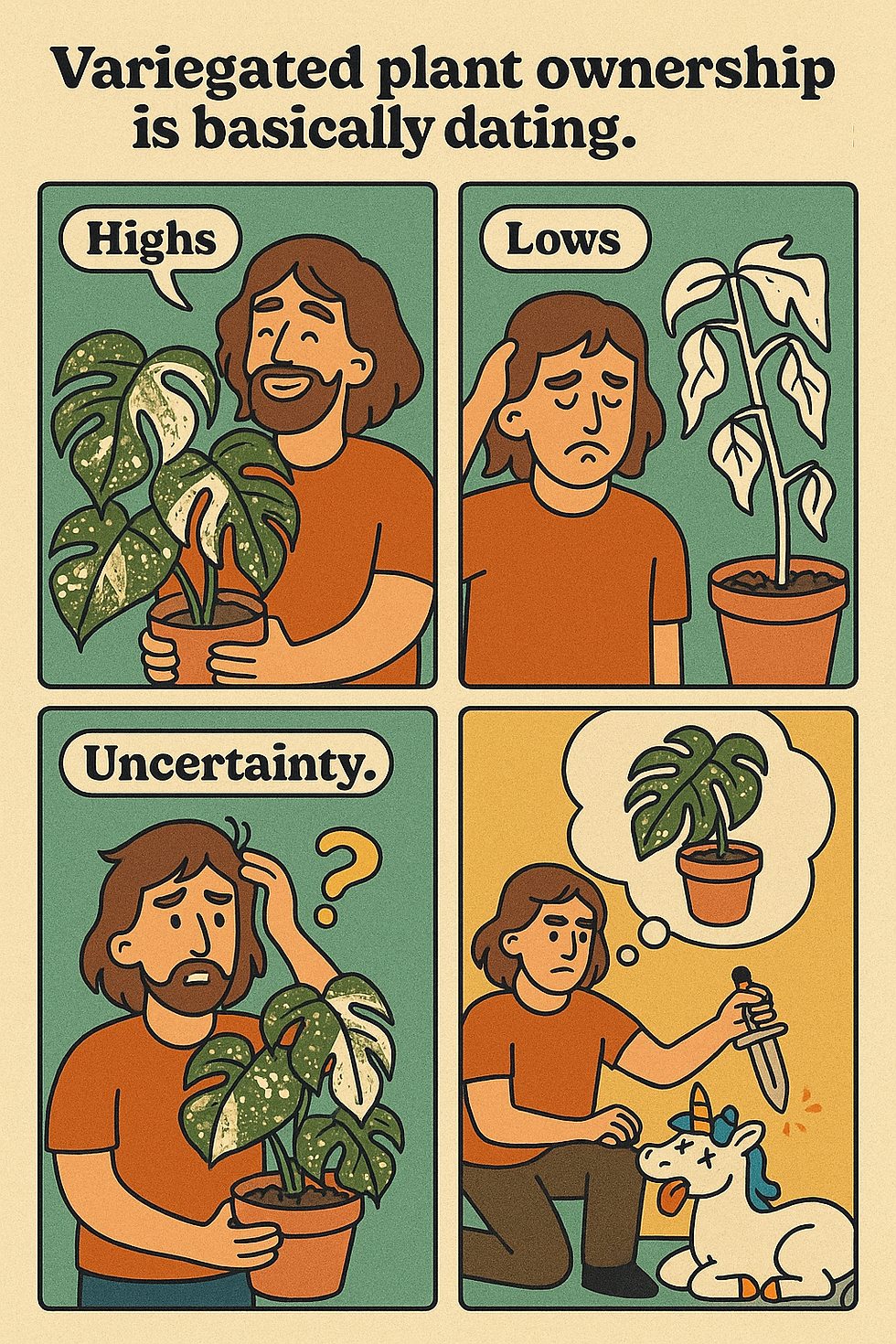
It’s chaos. It’s addictive. It’s why we keep doing it.
Final Thoughts (and a Little Plug)
Variegation is a blessing and a curse. It’s fragile, unstable, and sometimes completely irrational — which is exactly why we’re obsessed.
And this? This is just scratching the surface. In my book, I dive deeper into the science of variegation, why it happens, why it matters, and why we keep spending ridiculous amounts of money chasing it.
Pre-order my book now and get ready to level up your jungle knowledge. And hey — while we’re celebrating, don’t forget everything green is currently 15% off in my shop UNTIL THIS SATURDAY. Your next variegated obsession might just be waiting for you.


Comments