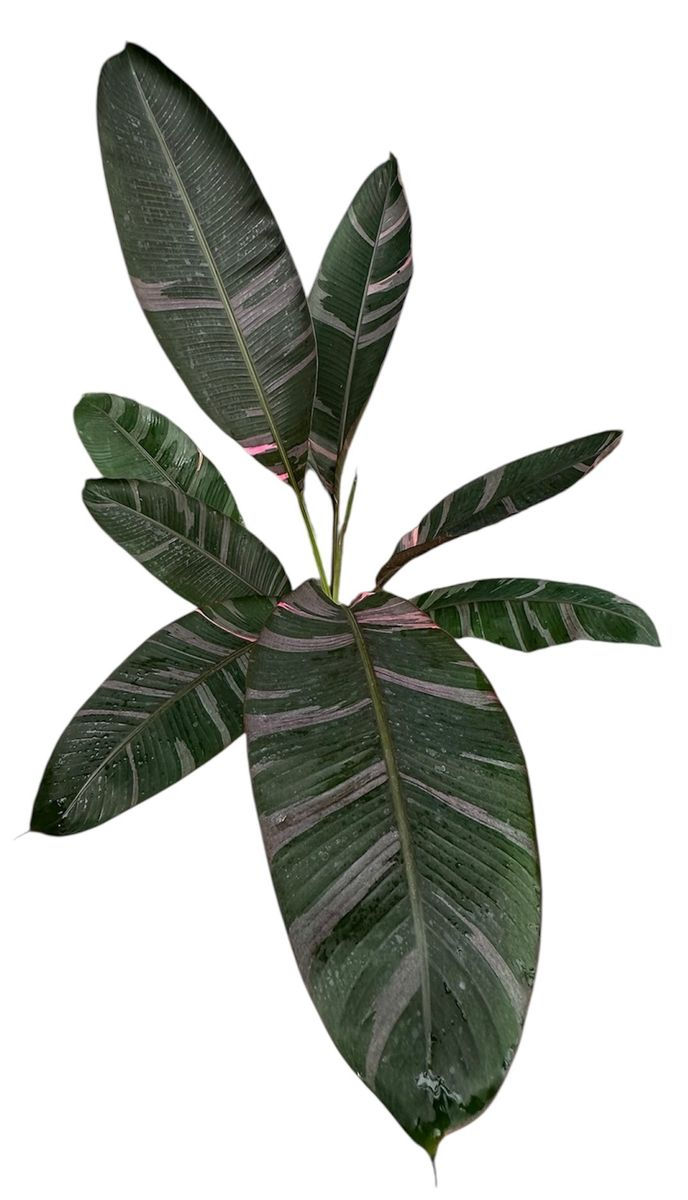
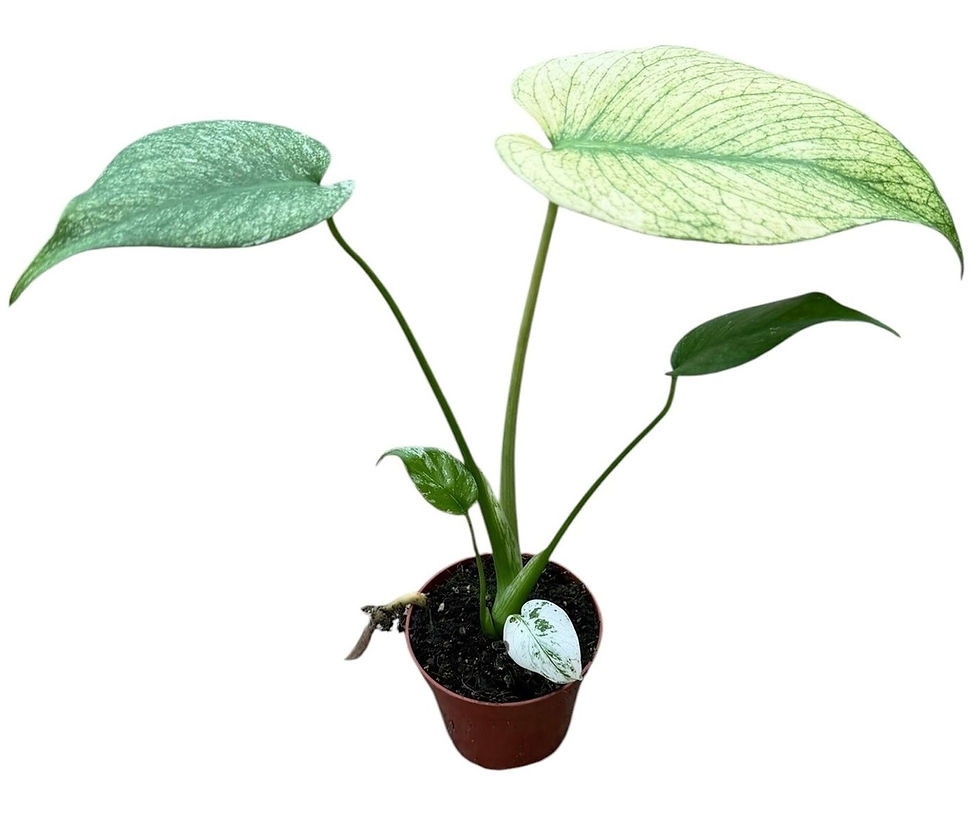
Cnidoscolus aconitifolius ‘Variegata’ - 17cm/70-80cm
Cnidoscolus aconitifolius ‘Variegata’
If you’ve never heard of Cnidoscolus aconitifolius, don’t worry. Most people haven’t.
But once you’ve seen the variegated form… it sticks in your head.
Better known as Variegated Chaya or the Tree Spinach, this unusual shrub originates from Mexico and Central America, where the green form has been grown for centuries as an edible crop. (Important note: the leaves must always be cooked before eating. Never eat them raw.)
Thankfully, most collectors aren’t growing this one for dinner.
They’re growing it because it’s utterly bonkers.
The deeply lobed leaves are splashed with bright creams, buttery yellows and fresh greens that seem almost too vibrant to be real. Each new flush emerges looking like someone has attacked it with a paintbrush before slowly hardening off into a spectacular display of variegation.
Unlike many variegated plants that crawl along at the pace of a hungover snail, this one has no interest in hanging around. Given warmth, sunshine and a bit of space, it grows with serious enthusiasm, quickly becoming a tropical centrepiece that’s guaranteed to start conversations.
It’s an unusual plant. It’s a rare plant. And it’s definitely not one you’ll find sitting on the shelves of your average garden centre.
Looking after your Cnidoscolus
This is a surprisingly straightforward plant to grow.
Give it plenty of bright light, warmth and a free-draining compost. Water thoroughly, then allow the top of the compost to dry before watering again. During the warmer months it’ll reward you with fast, vigorous growth.
One thing worth mentioning… the sap can be irritating to the skin, so it’s worth wearing gloves when pruning or taking cuttings.
If you’re after something genuinely different that’ll have visitors asking, “What on earth is that?”, this ticks every box. It’s bold, bizarre and beautifully variegated. Exactly how we like our plants.