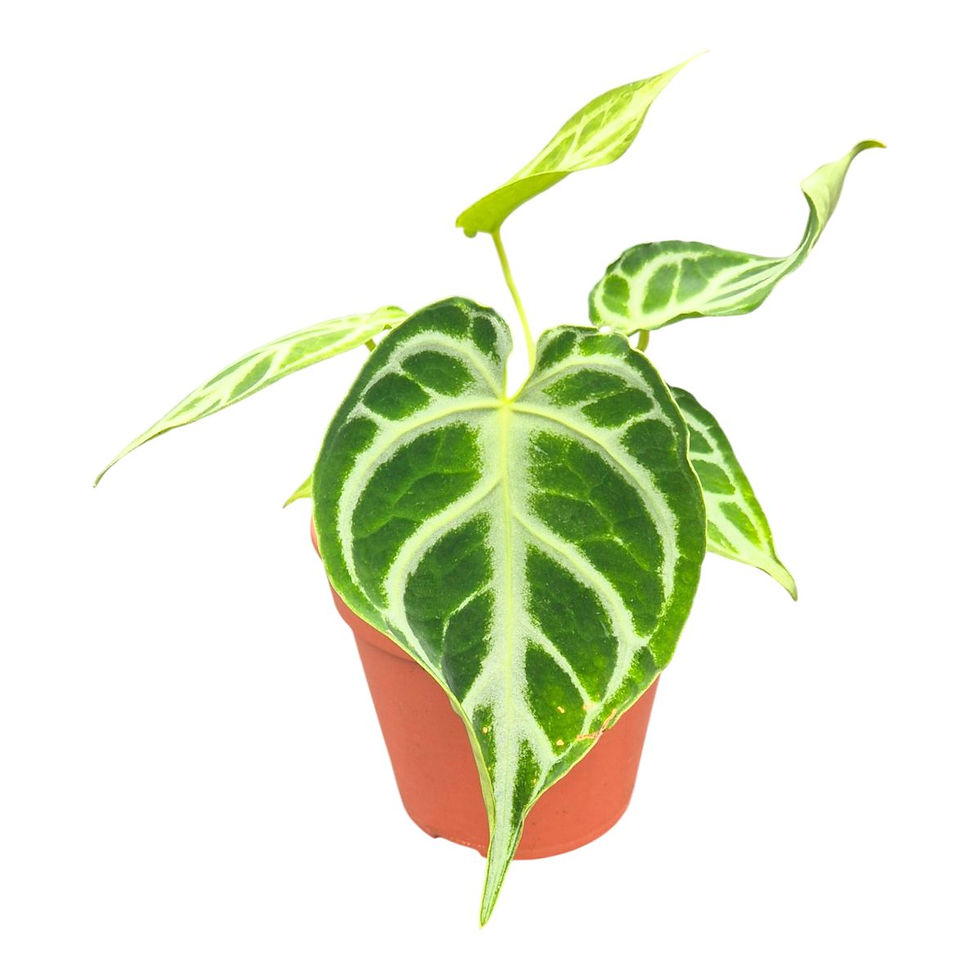
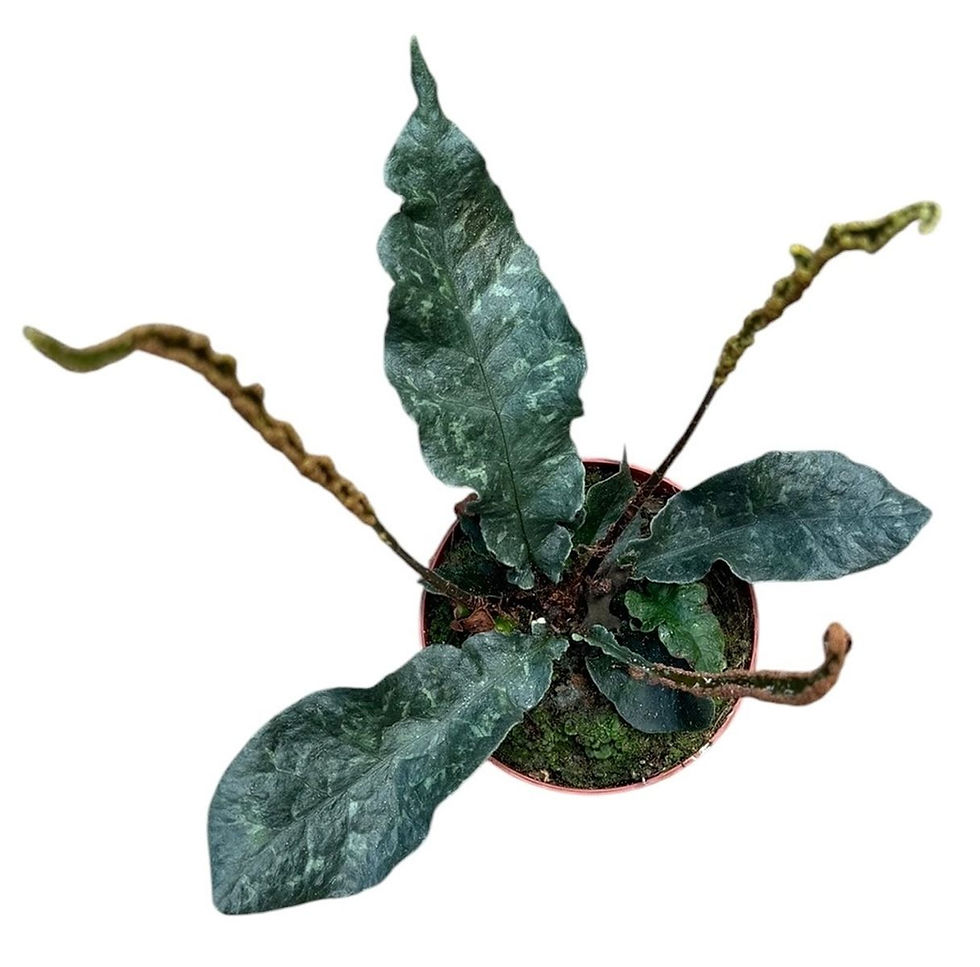
Anthurium warocqueanum - 12cm / 45-55cm
Anthurium warocqueanum, often called the Queen Anthurium, is not subtle.
It is elongated velvet in its purest form. Long, narrow, dramatically pendulous leaves that can exceed a metre in length when mature. Deep forest green, almost black under strong light, with luminous silver veining running the full stretch like illuminated arteries.
This is one of the most recognisable velvet Anthurium species in serious collections.
Native to Colombia, Anthurium warocqueanum grows epiphytically in humid forests, allowing its foliage to hang freely. Indoors, it brings that same vertical elegance, provided you give it height and consistency.
Collectors pursue it because:
• Mature leaves are exceptionally long and narrow
• The velvet finish is intensely dark
• Vein contrast is clean and linear
• It holds prestige as a true species, not a novelty hybrid
But it also has a reputation.
Anthurium warocqueanum is not impossible, but it is particular. It dislikes cold, fluctuating conditions. It resents overwatering. It sulks in dry air.
Light should be bright and diffused. Too little light and growth stalls. Direct sun will scorch the velvet surface and leave permanent marks.
Water thoroughly when the top layer of your chunky aroid mix begins to dry. Never allow it to sit saturated. Roots require airflow, so bark, perlite or pumice are essential components. Heavy, waterlogged compost is the fastest route to decline.
Humidity makes a noticeable difference. While it can adapt to strong indoor setups, stable humidity above average household levels supports longer, smoother leaf expansion and reduces edge crisping.
Growth rate is steady once settled, though slower than many hybrid Anthurium. Each new leaf should exceed the previous in length and maturity if conditions are consistent.