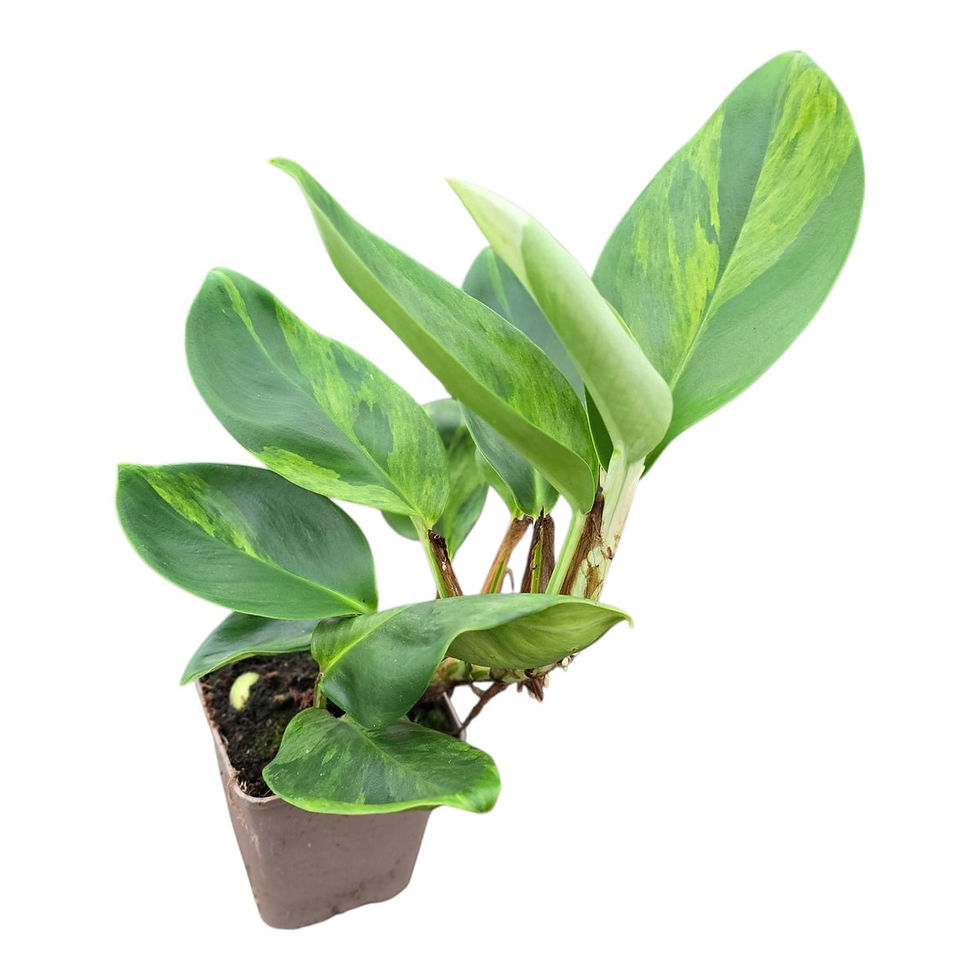
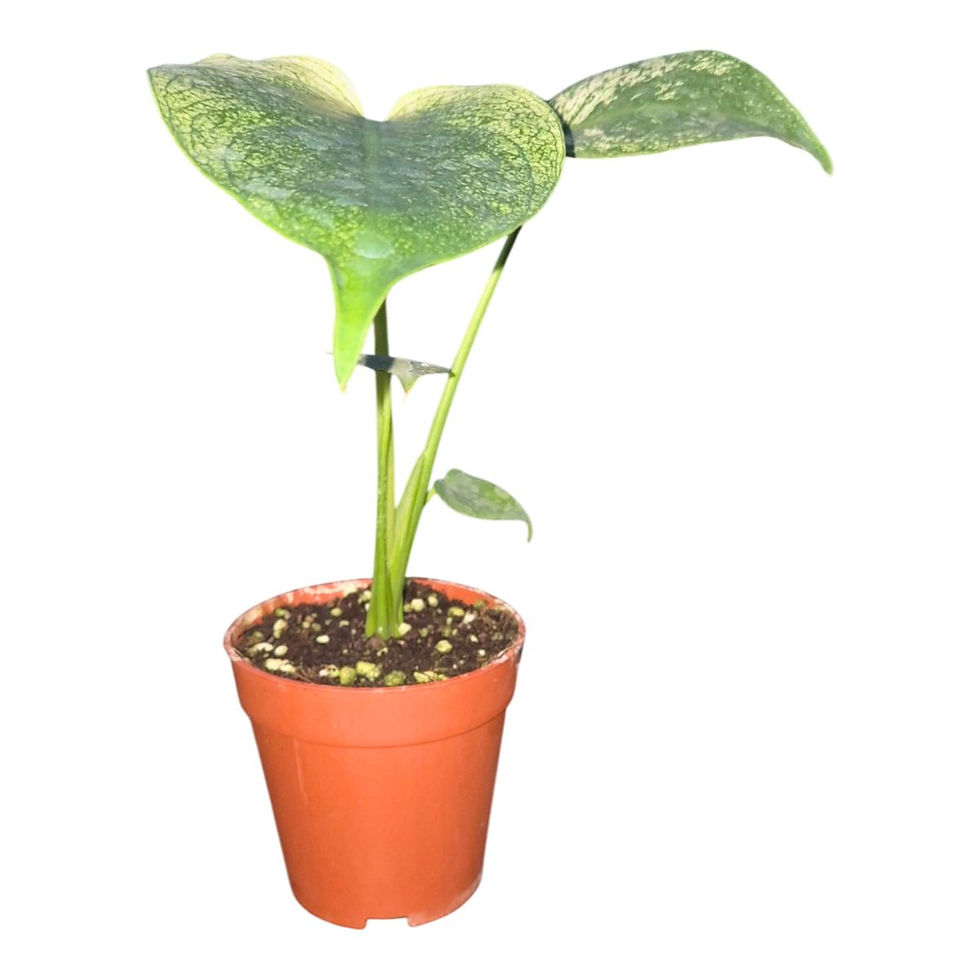
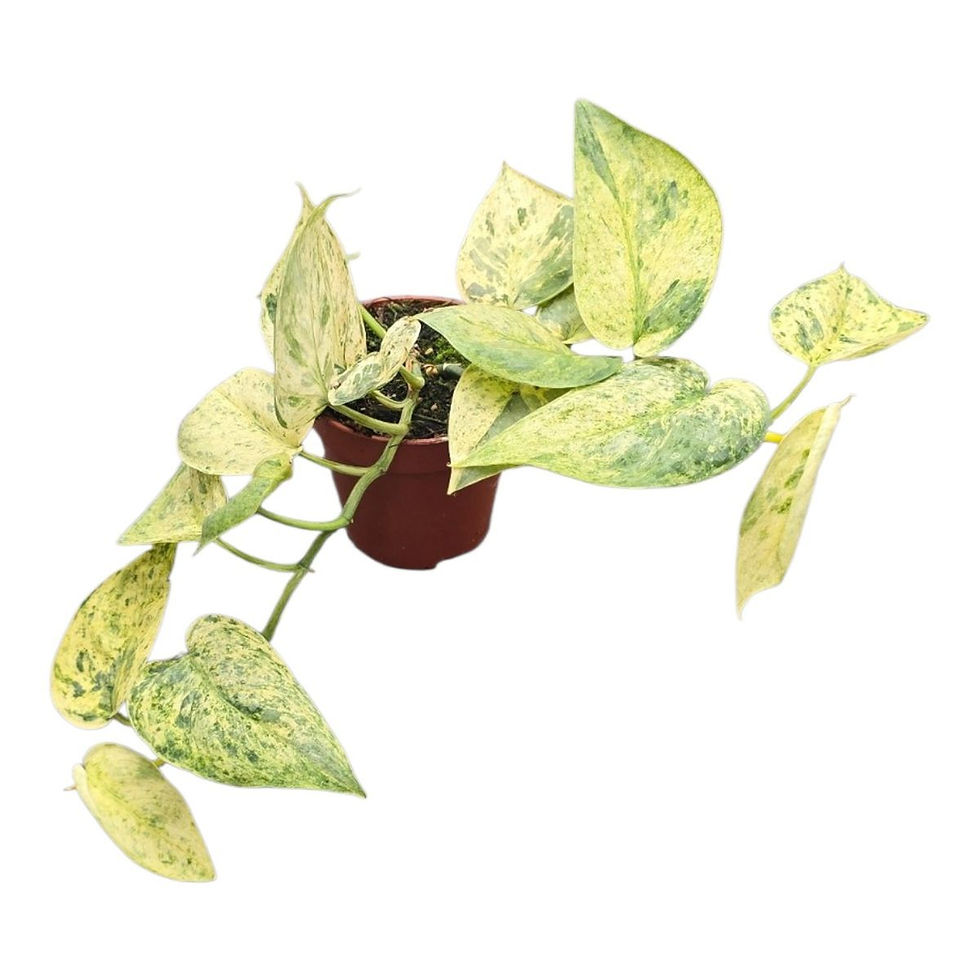
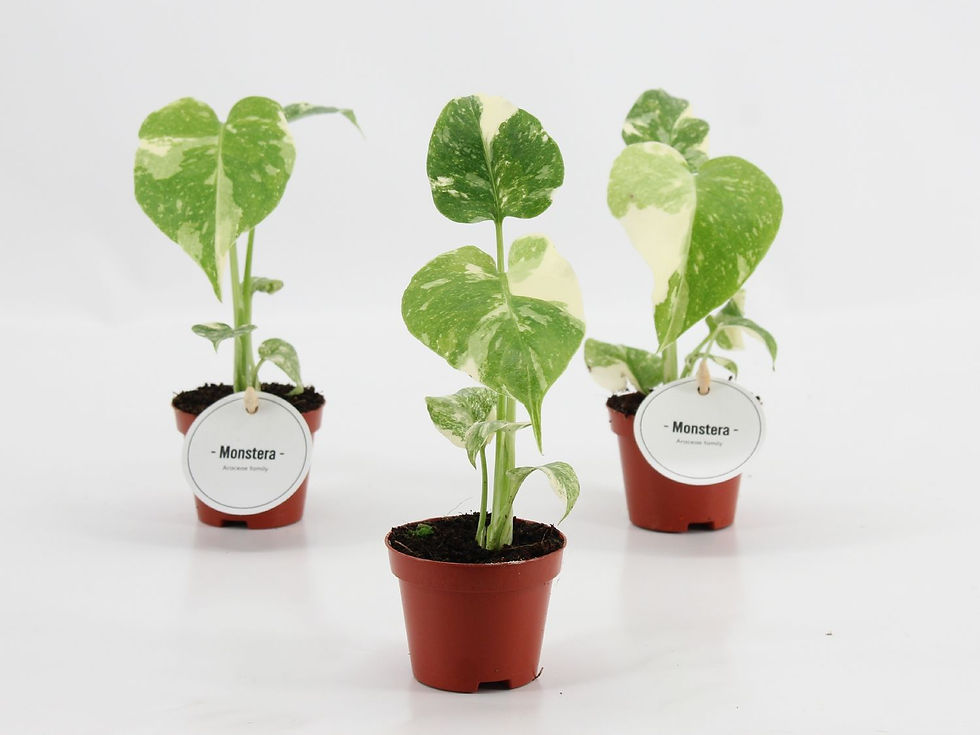
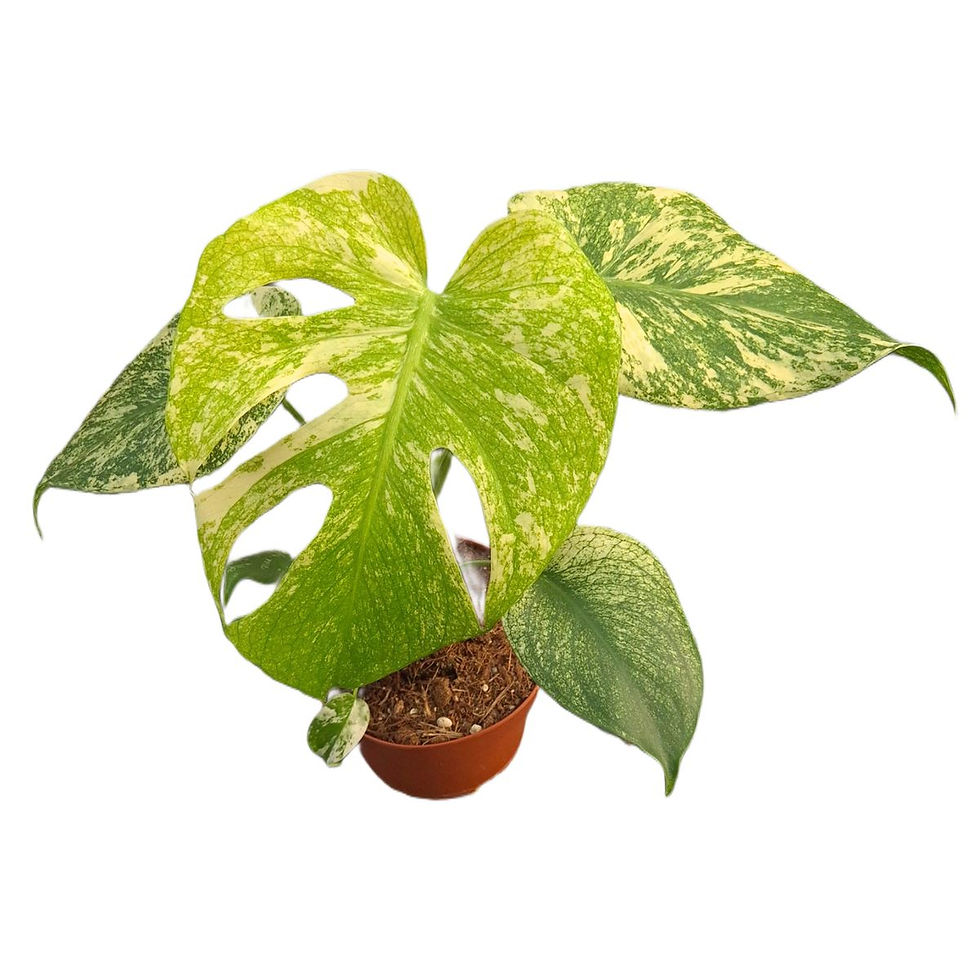
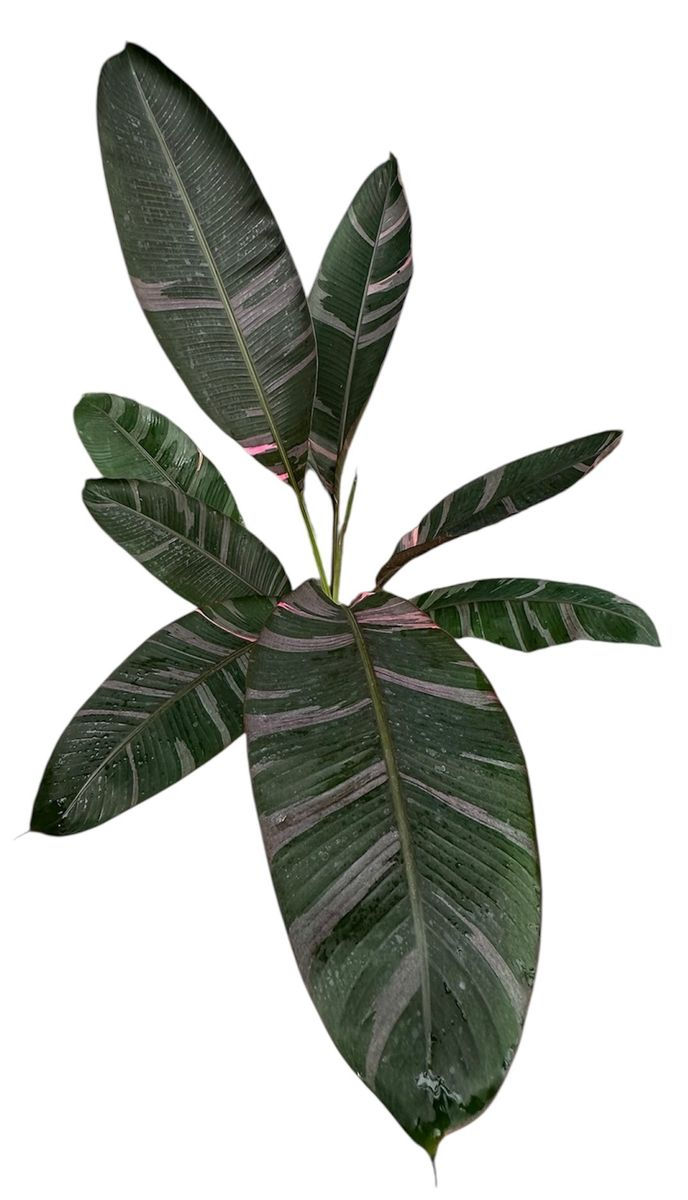
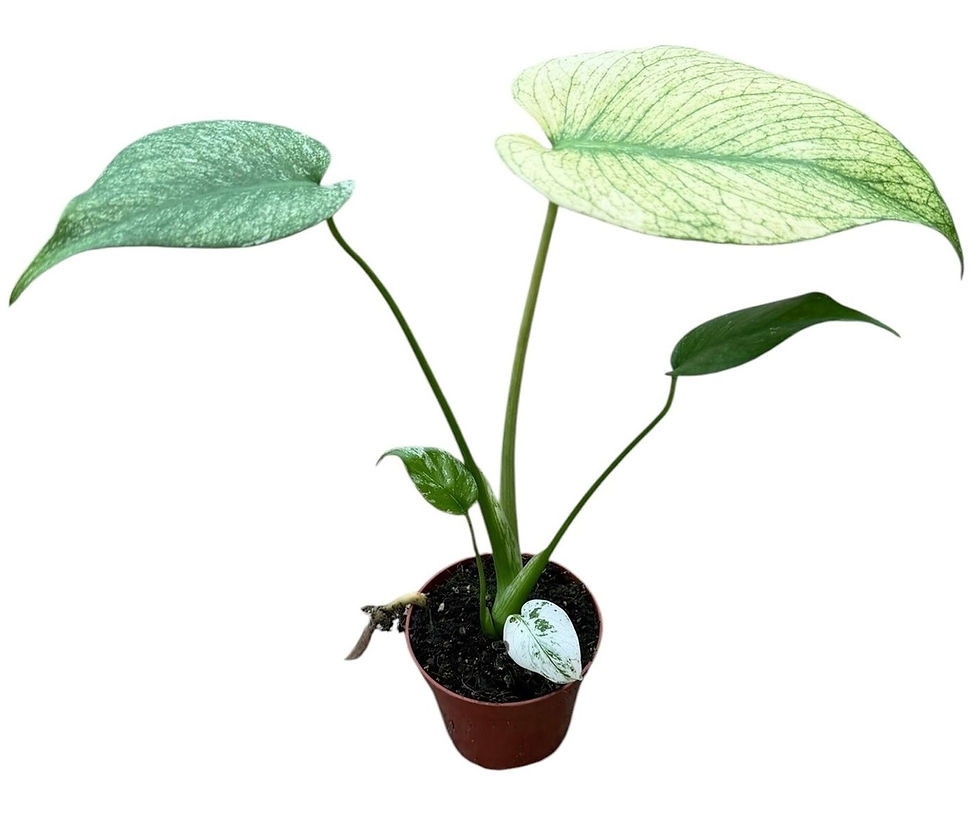
Monstera deliciosa 'Aurea variegata' - 17cm/90cm
Monstera Aurea is what happens when chlorophyll steps aside and lets gold take over.
This is the yellow variegated form of Monstera deliciosa, often referred to as Monstera deliciosa ‘Aurea’ or simply Monstera Marmorata. Instead of the cool white sectors seen in Albo forms, Aurea pushes saturated yellow, chartreuse and lime marbling through deep green leaves. The contrast is warmer, richer, almost molten in certain light.
And it does not whisper.
Where white variegation can feel refined, Aurea feels opulent. Each leaf unfurls painted in unpredictable streaks and splashes, sometimes finely marbled, sometimes boldly sectoral. As the leaf hardens, the yellow intensifies, creating a stained glass effect across the fenestrations.
Collectors value Monstera Aurea because:
• Yellow variegation is rarer and often less stable
• High colour expression requires strong genetics
• Mature fenestrated leaves with gold marbling are genuinely dramatic
• Well rooted specimens are slow to produce and highly sought after
Like all variegated Monsteras, it grows more slowly than its all green counterpart. Less chlorophyll means less energy production. That slower pace is not a flaw. It produces thicker stems, deliberate leaf spacing, and a plant that feels substantial rather than rushed.
Light is the difference between brilliance and disappointment. Bright, indirect light keeps the yellow vivid and reduces reversion. In lower light, expect greener leaves as the plant compensates. Direct midday sun can scorch the pale areas, so filtered light is ideal.
Water when the top third of the soil dries. Use a chunky aroid mix with bark, perlite or pumice, and minimal peat. Roots must breathe. Overwatering is the most common reason these decline.
Humidity helps, especially during active growth, but it adapts well to average UK indoor conditions if light is sufficient.