Rhaphidophora tetrasperma 'Variegata' - 10.5 cm/20-30 cm
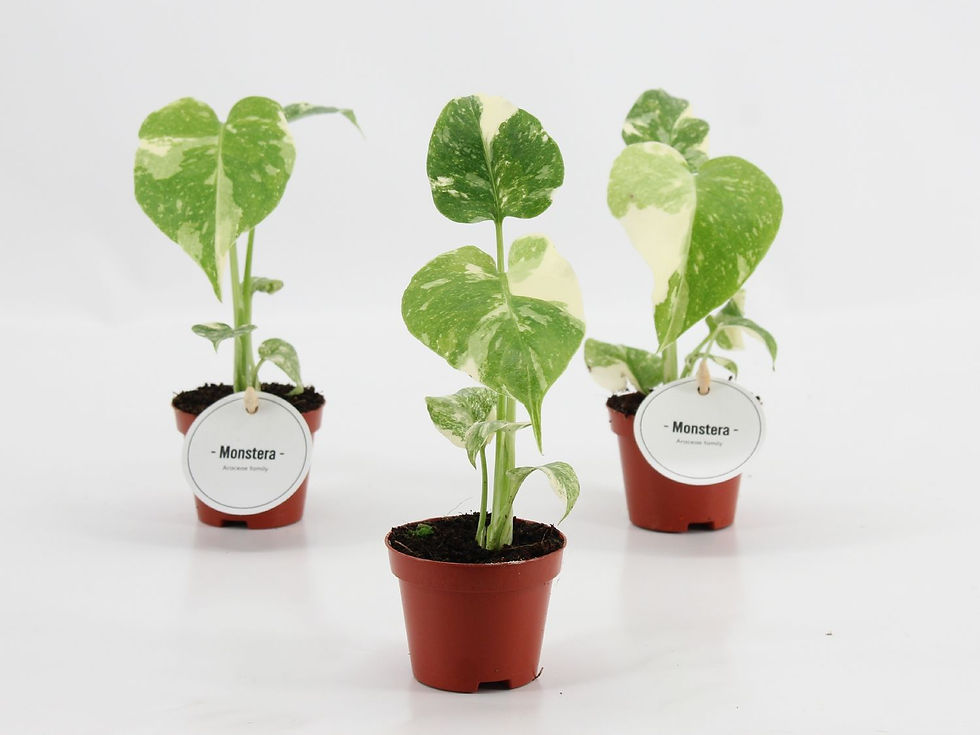
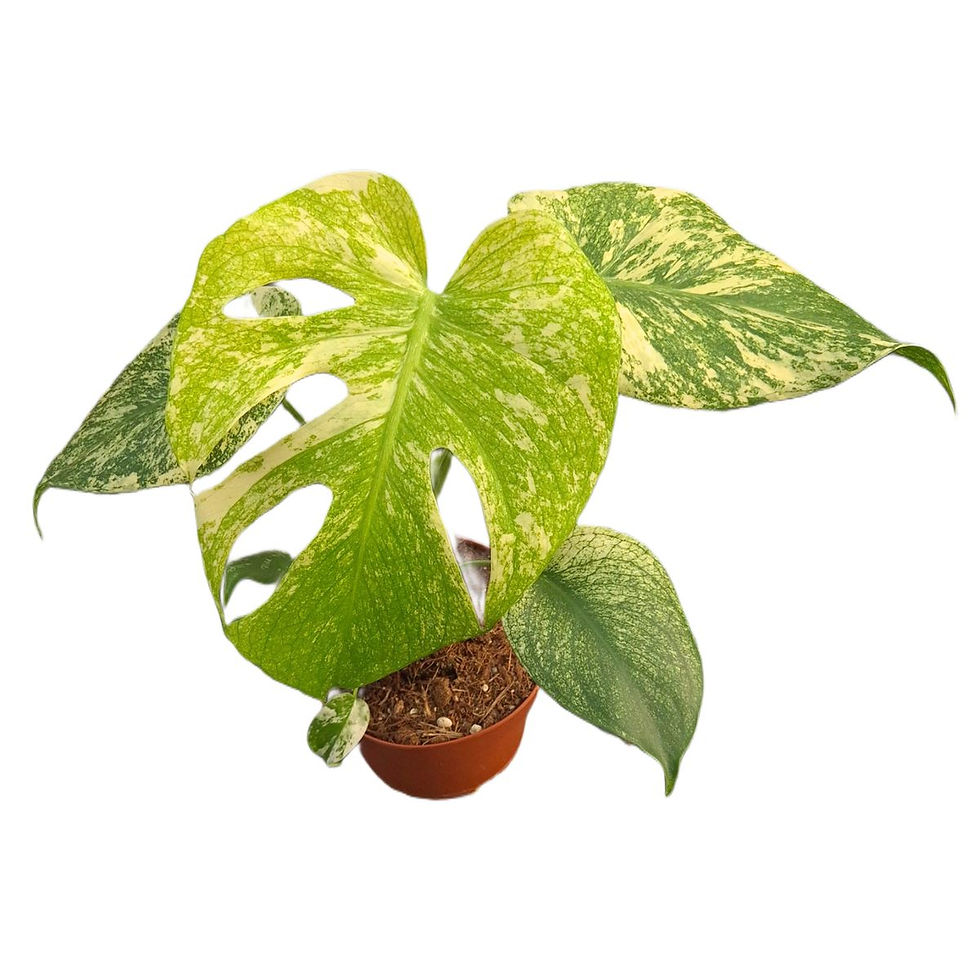
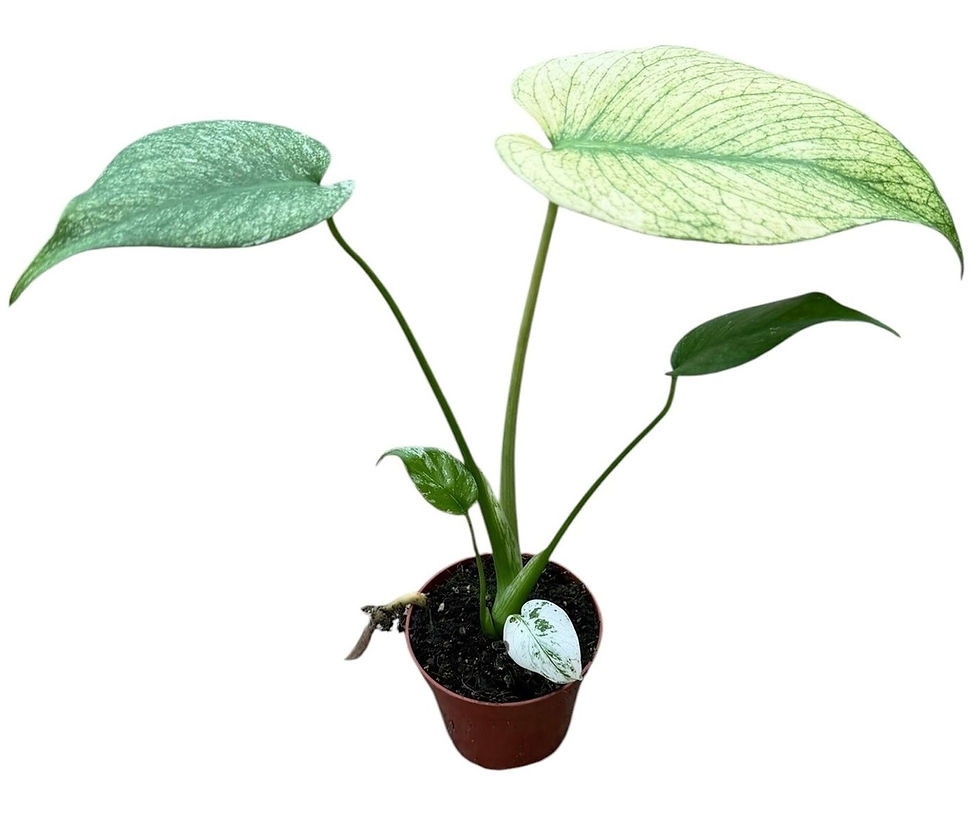
Rhaphidophora tetrasperma ‘Variegata’, often referred to as the variegated Mini Monstera, delivers classic split leaf structure in a more compact, controlled form.
This is not a true Monstera, but the resemblance is obvious. Deep, clean splits form along glossy green leaves, while white to creamy variegation streaks, marbles or sectors across the surface. The contrast can range from delicate flecking to bold half moon sections depending on the individual plant.
The appeal lies in proportion. You get architectural fenestration without waiting years for size.
Collectors pursue Rhaphidophora tetrasperma ‘Variegata’ because:
• It offers split leaf drama in a smaller footprint
• White variegation adds high contrast to fast growth
• It climbs readily and responds well to support
• It remains sought after in the UK variegated aroid market
Growth is typically faster than heavily variegated Monstera forms, though white sections still slow chlorophyll production slightly. With adequate light and support, it can produce impressively cut leaves within a relatively short period.
This is a climber. Provide a moss pole or totem and it will reward you with larger, more defined foliage and tighter internodes. Left unsupported, it will trail but lose some structural strength.
Light should be bright and indirect. Strong filtered light keeps the white crisp and reduces green reversion. Too little light will encourage darker foliage as the plant compensates.
Water thoroughly when the top third of the soil has dried. A chunky, well draining aroid mix with bark and perlite or pumice is essential to prevent root rot and maintain airflow.
Humidity supports smoother leaf expansion, though it adapts well to stable UK indoor conditions when warmth and light are consistent.